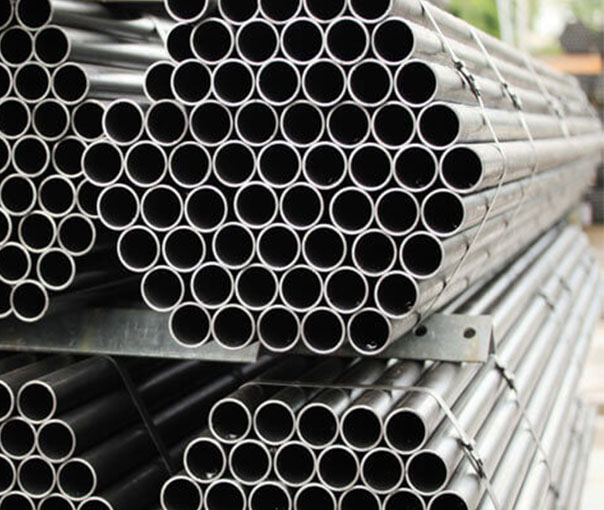
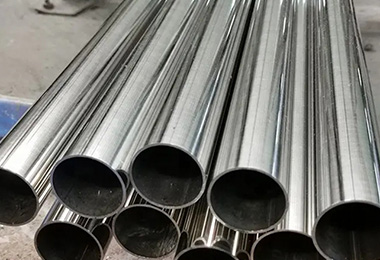
A500 square tubing is a common type of cold-formed hollow steel section used in structural applications, with a square cross-section. This material has wide applications in construction and engineering, primarily due to its specific mechanical properties and structural characteristics.
Material Chemical Composition Requirements: Under the ASTM A500 standard, there are four grades: GrA/B/C/D. The carbon content of each grade is controlled within the range of 0.26%-0.31%, and the manganese content must be at least 1.35%. Specifically, GrC/D grades require the addition of 0.2%-0.6% copper to enhance corrosion resistance, and the content of impurities such as phosphorus and sulfur is strictly limited to below 0.05%.
Dimensional Tolerance System: The outer diameter tolerance adopts the ASTM's unique "plus-over" system: For side lengths ≤ 50mm, a deviation of +0.4/-0.8mm is allowed; for the 50-100mm range, +0.6/-1.2mm is allowed; for dimensions > 100mm, the tolerance is extended to +1.0/-1.6mm.
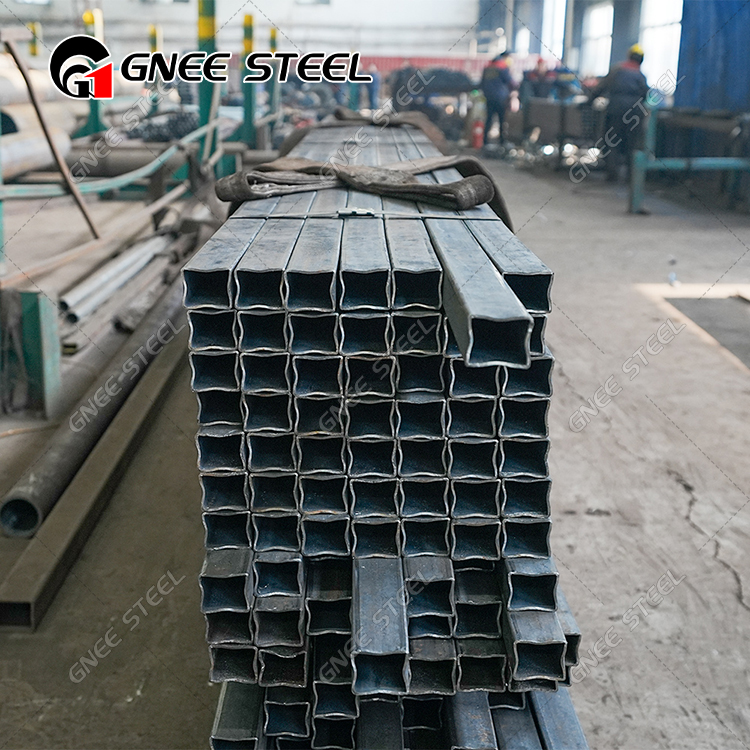
The wall thickness tolerance follows the "under-tolerance" principle, stipulating that the minimum wall thickness must not be less than 87.5% of the nominal value.
The perpendicularity deviation of rectangular tubes is strictly required, with the diagonal difference controlled within 1.5% of the side length. It is worth noting that ASTM A500 allows for slight torsion up to 0.5°, but the straightness deviation per meter must not exceed 1.6 mm.
Mechanical performance indicators: Taking the commonly used GrB grade as an example, the lower limit of yield strength is 315 MPa, the tensile strength must reach the range of 400-550 MPa, and the elongation must be ≥18%. Impact toughness testing uses Charpy V-notch specimens, and the minimum absorbed energy must reach 20 J at -20℃. The hardness value is specified as below HRB72 to ensure subsequent processing performance. The standard specifically emphasizes that a flattening test is required on the short side of the rectangular tube; when the distance between the two pressure plates is three times the wall thickness, the specimen must not show cracks or delamination.


.jpg)
.jpg)