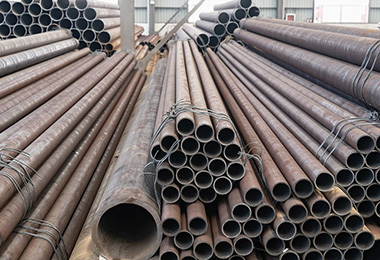
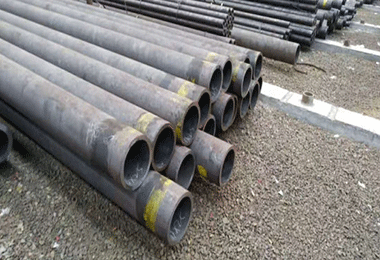
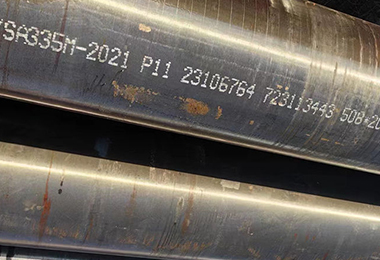
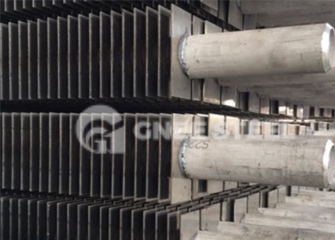
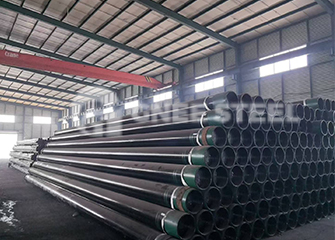
A209 alloy pipe is an alloy steel pipe conforming to American standards and belongs to the alloy steel pipe category. It possesses oxidation resistance, high-temperature steam corrosion resistance, and good impact toughness, creep ductility, and thermal strength. Its allowable stress below 620°C is higher than that of austenitic stainless steel. It is mainly used in ultra-high temperature boiler tubes, high-temperature superheaters, reheater steel pipes, high-temperature headers, steam pipelines, as well as nuclear power heat exchangers and petroleum cracking unit furnace tubes.
Chemical Composition Of SA 209 Steel Pipe, A209 Grade T1, T1a & T1b
| Grade |
Mo |
Cr |
Mn |
P |
S |
C |
Si |
| T1 |
0.44-0.65 |
/ |
0.30-0.80 |
≤0.025 |
≤0.025 |
0.10-0.20 |
0.10-0.50 |
| T1a |
0.44-0.65 |
/ |
0.30-0.80 |
≤0.025 |
≤0.025 |
0.15-0.25 |
0.10-0.50 |
| T1b |
0.44-0.65 |
/ |
0.30-0.80 |
≤0.025 |
≤0.025 |
0.14max |
0.10-0.50 |
Mechanical Properties of ASTM A209 Steel Pipe
| Grade |
T1 |
T1a |
T1b |
| Tensile Strength min Ksi(Mpa) |
55(380) |
60(415) |
43(365) |
| Yield Strength Min Ksi(Mpa) |
30(205 |
32(220) |
28(195) |
| Elongation in 2in or 50mm min% |
30 |
30 |
30 |
Inspection and Testing:
Tensile Test: For batches of no more than 50 steel pipes, one sample should be randomly selected for a tensile test to verify the tensile strength of the steel pipe.
Flattening Test: One sample should be taken from each end of each finished pipe for a flattening test to examine the deformation of the steel pipe during the flattening process, in order to determine its toughness and structural strength.
Flanging Test: Similarly, one sample should be taken from each end of each finished pipe for a flaring test to examine the deformation capacity of the pipe end during the flaring process, reflecting the ductility of the steel pipe.
Hardness Test: Two steel pipes should be randomly selected from each batch for Brinell or Rockwell hardness testing to ensure that the hardness of the steel pipe meets the standard requirements.
.jpg)

.jpg)