What Is API 8 Round Thread? — Definition & Standard
API 8 Round Thread is a family of casing and tubing connections defined in API Specification 5CT ("Casing and Tubing") and API RP 5C1 ("Recommended Practice for Care and Use of Casing and Tubing"). The designation "8 Round" refers to the thread pitch: 8 threads per inch (8 tpi).
Formal Standard Reference: Within API 5CT, the connection family is formally designated "API 8RD" (8 Round). It is one of three API-recognized connection categories alongside: BTC (Buttress Thread Coupling), and Premium / VAM / Hydril (proprietary gas-tight connections).
The 8RD thread form is a V-shaped (round crest and round root) profile with a 60° included angle and 12.7mm pitch. This profile provides:
- Good axial load (tension) capacity
- Pressure sealing via the thread compound seal (not metal-to-metal)
- Field repairability — damaged threads can be re-cut with standard dies
- Lower cost compared to Premium connections
However, 8RD connections are not gas-tight without proper thread compound application. In high-pressure or gas wells, engineers often upgrade to BTC or Premium connections for enhanced sealing integrity.
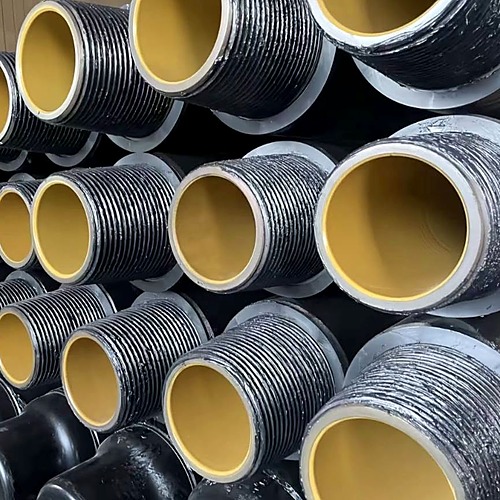
The Four 8RD Variants: STC, LTC, EUE, NUE
All four variants share the same basic 8 tpi V-thread profile. The differences lie in engagement length, end upset configuration, and resulting load capacity.
STC — Short Thread Coupling
The original and simplest 8RD variant. Features a short thread engagement (minimum 6½ threads engaged after makeup) and a correspondingly short coupling. Available for casing in sizes 127mm (5") and larger, and for tubing across all sizes. STC is the lowest-cost 8RD option but has the lowest axial load capacity of the family.
LTC — Long Thread Coupling
LTC offers a longer thread engagement (minimum 8 threads engaged) and a longer coupling. This increases tensile capacity by approximately 15-20% over STC. Available for casing in 177.8mm (7") and larger, and for tubing 60.3mm (2⅜") and larger. LTC is the workhorse connection for most casing strings worldwide.
EUE — External Upset End
EUE is a tubing-specific 8RD connection. The tube end is upset (forged thicker) externally before threading, providing greater wall thickness at the connection point. This increases both tensile and collapse resistance. EUE is available for tubing sizes 42.2mm (1.66") through 177.8mm (7"). It is the preferred 8RD connection for production tubing in demanding wells.
NUE — Non-Upset End
NUE is the tubing equivalent of STC. No upset is applied — the thread is cut directly onto the plain end of the tube. Lower cost but lower strength. Available for tubing 33.4mm (1.05") through 177.8mm (7"). Common in shallow, low-pressure wells and workover strings.
| Variant |
Full Name |
Thread Engagement |
Tensile vs STC |
Upset |
Size Range |
Typical Use |
| STC |
Short Thread Coupling |
Min 6½ threads |
Baseline (100%) |
None |
Casing ≥ 5" · Tubing all |
Low-cost casing, shallow wells |
| LTC |
Long Thread Coupling |
Min 8 threads |
+15-20% |
External optional |
Casing ≥ 7" · Tubing ≥ 2⅜" |
Most casing strings (standard choice) |
| EUE |
External Upset End |
Min 8 threads |
+20-30% |
External upset forged |
Tubing 1.66" - 7" |
Production tubing, demanding wells |
| NUE |
Non-Upset End |
Min 6½ threads |
Baseline (100%) |
None |
Tubing 1.05" - 7" |
Workover tubing, low-pressure wells |
Misconception Alert: Many engineers use "STC" and "LTC" interchangeably with "short thread" and "long thread." The correct API terminology for the connection
family is "API 8RD" or "8 Round," with STC/LTC/EUE/NUE as the four variants. "8RD" is the umbrella standard; the suffixes denote the specific configuration.
Thread Dimensions & Geometry
The API 8 Round thread form follows strict geometric parameters per API 5CT. Understanding these dimensions is essential for thread inspection, gaging, and troubleshooting connection failures.
Thread Profile (All 8RD Variants)
| Parameter |
Specification |
Value |
| Thread Pitch |
8 threads per inch |
3.175 mm |
| Included Angle |
V-profile, 60° total |
30° half-angle |
| Thread Height (theoretical) |
0.611 × pitch |
1.940 mm |
| Thread Height (actual, after truncation) |
Approx. 0.7 × theoretical |
1.36 mm |
| Crest / Root Form |
Round (radius = 0.12 × pitch) |
R = 0.381 mm |
| Taper |
API standard taper |
0.0625 in/in (6.25%) |
Key Axial Dimensions by Variant
| Dimension |
STC |
LTC |
NUE |
EUE |
| Min Thread Engagement (after makeup) |
6½ threads |
8 threads |
6½ threads |
8 threads |
| Min Pipe Thread Length (L4) |
4½ threads |
5¾ threads |
4½ threads |
5¾ threads |
| Coupling Length Range |
Depends on OD |
Depends on OD (longer) |
Depends on OD |
Depends on OD |
| Lead In Thread Length |
2 threads max |
2 threads max |
2 threads max |
2 threads max |
| Handling Length (if upset) |
N/A |
Optional |
N/A |
Required (1½ - 3") |
Complete API 5CT Specification Table
The following table provides specification values for the most commonly used 8RD casing and tubing sizes, directly extracted from API Spec 5CT 10th Edition:
Casing — 8RD STC & LTC Key Dimensions
| Nominal Size |
OD (mm) |
Coupling OD (mm) |
Coupling Length STC (mm) |
Coupling Length LTC (mm) |
Steel Grade |
| 4½" (STC only) |
114.30 |
127.00 |
158.75 |
— |
J-55, K-55, N-80 |
| 5" (STC only) |
127.00 |
141.30 |
165.10 |
— |
J-55, K-55, N-80, P-110 |
| 5½" |
139.70 |
153.67 |
165.10 |
177.80 |
J-55, K-55, N-80, P-110, Q-125 |
| 6⅝" |
168.28 |
187.71 |
177.80 |
190.50 |
J-55, K-55, N-80, P-110 |
| 7" |
177.80 |
191.89 |
— |
196.85 |
J-55, K-55, N-80, P-110, Q-125 |
| 7⅝" |
193.68 |
211.15 |
— |
196.85 |
N-80, P-110 |
| 8⅝" |
219.08 |
244.48 |
— |
203.20 |
J-55, K-55, N-80, P-110 |
| 9⅝" |
244.48 |
269.88 |
— |
203.20 |
J-55, K-55, N-80, P-110, Q-125 |
| 10¾" |
273.05 |
298.45 |
— |
228.60 |
J-55, K-55, N-80, P-110 |
| 12¾" |
323.85 |
360.48 |
— |
241.30 |
J-55, K-55, N-80 |
| 13⅜" |
339.72 |
377.19 |
— |
241.30 |
J-55, K-55, N-80, P-110 |
| 16" |
406.40 |
455.02 |
— |
266.70 |
J-55, K-55, N-80 |
| 20" |
508.00 |
571.50 |
— |
292.10 |
J-55, K-55, N-80 |
Tubing — 8RD NUE & EUE Key Dimensions
| Nominal Size |
OD (mm) |
Coupling OD (mm) |
Coupling Length (mm) |
Grade |
| 1.050" (NUE) |
26.67 |
33.34 |
88.90 |
J-55, N-80 |
| 1.315" (NUE) |
33.40 |
38.10 |
95.25 |
J-55, N-80, P-110 |
| 1.660" (EUE) |
42.16 |
48.26 |
101.60 |
J-55, N-80, P-110, Q-125 |
| 1.900" (EUE) |
48.26 |
55.88 |
108.00 |
J-55, N-80, P-110 |
| 2⅜" (NUE / EUE) |
60.33 |
73.03 |
114.30 |
J-55, N-80, P-110, Q-125 |
| 2⅞" (NUE / EUE) |
73.03 |
88.90 |
127.00 |
J-55, N-80, P-110 |
| 3½" (NUE / EUE) |
88.90 |
107.95 |
152.40 |
J-55, K-55, N-80, P-110 |
| 4" (EUE) |
101.60 |
124.85 |
165.10 |
J-55, N-80, P-110 |
| 4½" (EUE) |
114.30 |
141.30 |
177.80 |
J-55, N-80, P-110 |
GNEE Stock Note: We maintain 3,000+ tons of 8RD casing and tubing inventory in J-55, K-55, N-80, and P-110 grades across all standard sizes. Couplings are supplied machined to API 5CT H4 tolerance class. Quick turnaround — ship within 7 business days.
Makeup Torque Ranges (API RP 5C1)
Proper makeup torque is critical for 8RD connection performance. Under-torqueed connections leak and fail; over-torqueed connections can strip or gall threads. API RP 5C1 provides recommended torque ranges based on pipe OD, weight, grade, and connection type.
Critical Note: Always apply thread compound (API 5A3 approved) to both pin and box threads before makeup. The compound provides the primary sealing mechanism for 8RD connections. Without compound, even properly torqued 8RD connections will leak under pressure.
Representative Torque Values — LTC Casing, N-80 Grade
(Exact values depend on pipe weight — consult API RP 5C1 Table C.1 for your specific size/weight combination)
| Casing Size |
Weight (lb/ft) |
Min Torque (ft·lb) |
Optimum Torque (ft·lb) |
Max Torque (ft·lb) |
| 7" |
23.0 |
1,350 |
1,500 |
1,650 |
| 7" |
32.0 |
1,620 |
1,800 |
1,980 |
| 9⅝" |
36.0 |
2,430 |
2,700 |
2,970 |
| 9⅝" |
47.0 |
2,700 |
3,000 |
3,300 |
| 13⅜" |
48.0 |
3,150 |
3,500 |
3,850 |
| 13⅜" |
68.0 |
3,960 |
4,400 |
4,840 |
Torque Calculation Formula (simplified): For 8RD LTC connections, optimum torque ≈ pipe weight (lb/ft) × 90 (ft·lb). This is a useful field reference but always verify with API RP 5C1.
8RD vs. BTC vs. Premium — Which to Choose?
The three connection families serve different well conditions. Here's the decision framework:
| Aspect |
API 8RD (STC / LTC) |
BTC (Buttress Thread) |
Premium / VAM / Hydril |
| Thread Form |
Round V-thread, 8 tpi |
Buttress (load-bearing flank = 3°) |
Varies — trapezoidal or modified buttress |
| Tensile Capacity |
100% baseline |
+30-40% over 8RD |
+30-50% over 8RD |
| Pressure Sealing |
Compound seal only (no metal-to-metal) |
Compound seal + partial metal-to-metal |
Full metal-to-metal seal (gas-tight) |
| Use in Gas Wells |
⚠️ Only with caution / special compound |
✅ Acceptable for most gas wells |
✅ Required for sour, high-pressure gas |
| Field Repairable |
✅ Yes (standard dies) |
⚠️ Limited (special dies) |
❌ No (factory-only repair) |
| Cost Premium |
Baseline (100%) |
+15-25% |
+50-150% |
| API Standard |
API 5CT |
API 5CT |
Proprietary (each manufacturer's spec) |
| Typical Use |
Surface casing, shallow wells, low-pressure tubing |
Intermediate casing, deeper wells, some production casing |
Production casing/tubing, deepwater, high-pressure/high-temperature (HPHT) |
Decision Tree:
• Surface casing, onshore oil well →
API 8RD LTC (lowest cost, sufficient strength)
• Intermediate casing, offshore platform →
BTC (higher tension, better sealing)
• Production casing/tubing in HPHT or sour wells →
Premium (gas-tight sealing)
• Low-cost workover or shallow well →
API 8RD STC / NUE (lowest cost option)
Key Tolerances & Inspection
Thread quality control is critical for 8RD connections. API 5CT specifies tight tolerances on the key functional dimensions:
Thread Inspection Methods
- Thread Ring & Plug Gages — verify pitch diameter (PD) within specified tolerance band (H4 for standard, H6 for closer-tolerance)
- Thread Profile Gage — checks thread height, angle, and crest/root radii
- Lead Gage — verifies thread lead per inch (must be within ± 0.0025"/thread)
- Visual / Magnetic Particle Inspection — detects thread cracks, chips, and surface defects
- Coupling Squareness Check — coupling face must be ≤ 0.002" from perpendicular to thread axis
Common Thread Defects to Reject
- Broken or chipped threads (more than 1 thread within engaged length)
- Partial thread crests (incomplete thread form)
- Thread galling (damage from improper previous makeup)
- Excessive thread flatness at crest or root
- Lead error exceeding tolerance
FAQ
What is the difference between API 8 Round and VAM?
API 8 Round is a standardized API connection (API 5CT) with open specification and field-repairable threads. VAM (owned by Vallourec) is a proprietary Premium connection with full metal-to-metal sealing for gas-tight service. VAM costs significantly more and cannot be field-repaired. API 8RD is for general service; VAM is for HPHT / sour gas wells.
Can API 8RD connections be used in gas wells?
Technically yes, but with caution. API 8RD relies on thread compound (not metal-to-metal) for sealing. For low-pressure, dry gas wells with proper API 5A3 thread compound, 8RD LTC is commonly used. For high-pressure, sour, or condensate gas wells, BTC or Premium connections are recommended due to their superior sealing integrity.
What's the difference between short thread (STC) and long thread (LTC)?
Both share the same 8 tpi V-thread form. The difference is engagement length: STC engages a minimum of 6½ threads after makeup; LTC engages a minimum of 8 threads. LTC thus has 15-20% higher tensile capacity but costs slightly more (longer coupling). LTC is the standard choice for most casing strings.
Is API 8 Round the same as 8 RD?
Yes. "API 8 Round Thread" and "API 8RD" are different names for the same connection family. "8RD" is the formal designation within API 5CT (RD = Round). The full family includes four variants: STC, LTC, EUE, and NUE. "8 Round" is the common field shorthand.
What thread compound should I use with 8RD?
Use an API 5A3-approved thread compound specifically rated for casing/tubing connections. For standard service: API 5A3 PSL-2 or PSL-3 (metal-based compound with zinc or copper flake). For H₂S or high-temperature service: use compounds with anti-seizure additives (e.g., nickel-based). Always apply to both pin and box threads per API RP 5C1.
What is the correct API designation for 8RD casing?
When specifying, include: Casing size + weight + grade + connection type. Example: "9⅝" × 47 lb/ft × N-80 × LTC". The connection identifier goes at the end. For tubing: "3½" × 9.20 lb/ft × P-110 × EUE". This follows API 5CT ordering conventions.
How do I calculate makeup torque for 8RD?
The definitive source is API RP 5C1 Table C.1, which tabulates torque ranges by OD, weight, grade, and connection type. As a field rule of thumb: for 8RD LTC casing, optimum torque ≈ pipe weight (lb/ft) × 90 ft·lb. But this is approximate — always verify with the official table.
Does GNEE supply API 8RD casing and tubing?
Yes. GNEE supplies all four API 8RD variants (STC, LTC, EUE, NUE) across all standard casing and tubing sizes. Threading is performed on CNC machines to API 5CT H4 or H6 tolerance class. We also supply API 5CT couplings as a separate line item. 3,000+ tons of inventory available, reply within 2 hours.