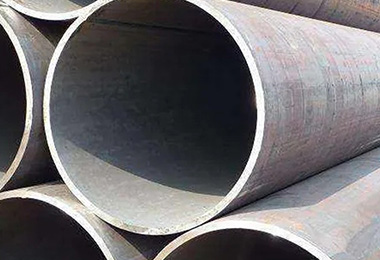
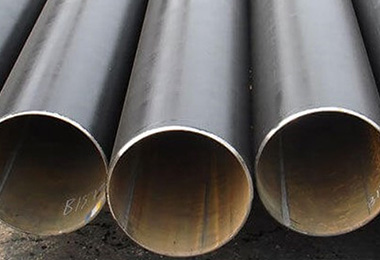
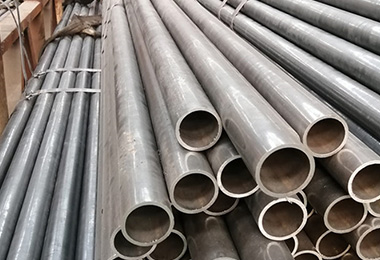
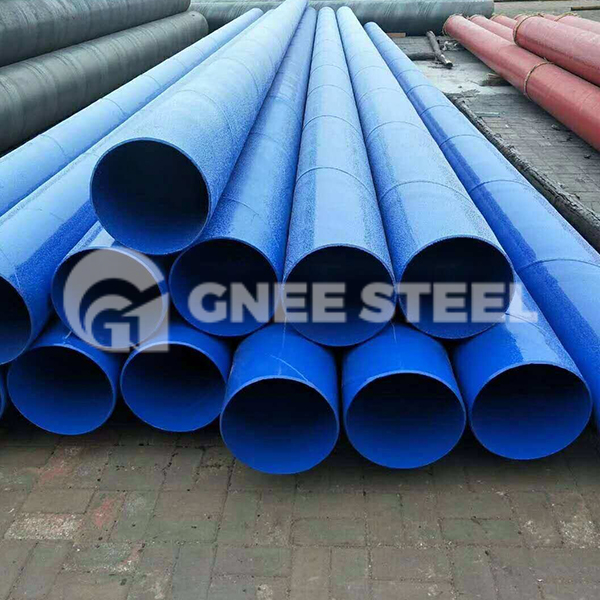
FBE, short for Fusion Bonded Epoxy, refers to FBE epoxy resin powder coated steel pipe. This type of pipe is made by uniformly applying epoxy resin powder coating to the surface of a pre-treated steel pipe (e.g., shot blasting, heating). The powder melts, flows, and solidifies upon heating, ultimately forming a continuous, dense, and hard anti-corrosion coating on the outer or inner wall of the steel pipe.
This coating is tightly bonded to the steel pipe substrate through chemical bonds and physical interactions, acting like a robust "protective suit" for the pipe. It effectively isolates the steel pipe from corrosive external environments (such as soil, moisture, chemical media, and microorganisms), significantly extending the service life of the steel pipe and ensuring the purity and safety of the transported media (such as oil, natural gas, and water).
Features
Excellent Corrosion Resistance
Fusion-bonded epoxy powder possesses extremely strong corrosion resistance, effectively resisting the erosion of steel pipes by soil moisture, chemicals, and microorganisms, significantly extending the service life of the steel pipes. For example, in buried pipeline applications, FBE steel pipes can operate stably for extended periods in harsh soil environments, reducing the risk of pipeline leaks and damage caused by corrosion.
High Resistance to Various Chemical Media such as Acids, Alkalis, and Salts, Suitable for Pipeline Systems Transporting Corrosive Media in Chemical, Petroleum, and Other Industries.
Excellent Mechanical Properties
Possessing high hardness and strength, it can withstand certain external pressure and mechanical impacts. During pipeline installation and use, it is not easily deformed or damaged by external forces. For example, during pipeline laying, FBE steel pipes can withstand external forces during hoisting and transportation, ensuring the integrity of the pipeline.
Good Wear Resistance, reducing wear caused by friction during media transport, extending the service life of the pipeline. The wear resistance advantage of FBE steel pipes is particularly pronounced when transporting media with a high solid particle content.
Strong Adhesion
The fusion-bonded epoxy powder exhibits extremely strong adhesion to the steel pipe surface, making coating peeling unlikely. This is because during the coating process, the epoxy powder melts at high temperatures and bonds tightly to the steel pipe surface, forming a strong chemical bond. This strong adhesion ensures the coating maintains excellent anti-corrosion performance throughout long-term use.
Adhesion tests, such as the cross-cut test and pull-out test, typically show that the coating adhesion of FBE steel pipes meets relevant standard requirements, guaranteeing the reliability of the pipeline system.
Good Insulation Performance
The FBE coating possesses excellent insulation properties, effectively preventing current conduction and reducing the risk of electrochemical corrosion in the pipeline. In applications with high electrical insulation requirements, such as areas crossing electrified railways or near high-voltage cables, FBE steel pipes provide excellent protection.
Its insulation resistance is typically high, meeting the insulation performance requirements of pipelines in various application scenarios.
Environmentally Friendly
Fuse-bonded epoxy powder is a solvent-free coating that does not produce volatile organic compounds (VOCs) during application, making it environmentally friendly. Compared to traditional solvent-based coatings, the production and construction process of FBE steel pipes is more environmentally friendly, meeting modern society's requirements for green and environmentally friendly practices.
They are recyclable; after the steel pipes reach the end of their service life, with proper treatment, the FBE coating can be separated from the steel pipes, allowing for recycling and reuse, reducing resource waste.
Application Areas
Oil and Gas Industry
Pipelines used for transporting crude oil, natural gas, and refined oil products. In these fields, pipelines need to withstand high pressure, high temperature, and corrosive media. FBE steel pipes' excellent corrosion resistance and mechanical properties meet these stringent requirements. For example, in oil and gas field development, many long-distance pipelines from wellheads to gathering stations and refineries utilize FBE steel pipes.
FBE steel pipes are also widely used in pipeline systems of oil and gas storage facilities. For example, in the coils within oil storage tanks and in oil depot pipelines, the FBE coating effectively protects the pipelines from oil corrosion.
Water Supply and Drainage Engineering
In urban water supply and drainage systems, FBE steel pipes are used to transport drinking water, sewage, and rainwater. Their excellent corrosion resistance ensures that drinking water is not contaminated by pipeline corrosion products, while also extending the service life of drainage pipelines and reducing maintenance costs. For example, in municipal water supply and drainage projects in some large cities, FBE steel pipes have become one of the main pipe material choices.
In industrial water supply and drainage systems, FBE steel pipes also play a crucial role. In industries such as chemical, papermaking, and pharmaceuticals, where water quality requirements are high and pipelines need to withstand varying degrees of corrosive media, FBE steel pipes meet these specific requirements.
Marine Engineering
In marine engineering fields such as offshore oil platforms and subsea pipelines, FBE steel pipes possess excellent resistance to seawater corrosion and marine organism adhesion. Seawater is a highly corrosive medium containing large amounts of salt, dissolved oxygen, and microorganisms, causing severe corrosion to pipelines. The FBE coating effectively resists seawater erosion, ensuring the long-term stable operation of pipelines in marine environments.
Subsea pipelines typically need to withstand enormous water pressure and variations in seabed topography; the high strength and good flexibility of FBE steel pipes enable them to adapt to these complex operating conditions.
Other Applications
In industries such as coal mining and mining, FBE steel pipes are also commonly used for pipelines transporting mine water, methane, and other media. These pipelines need to operate in harsh underground environments, and the corrosion resistance and mechanical properties of FBE steel pipes meet their specific requirements.